"We'll Just Use Claude": What Happens When It Gets Switched Off
Plenty of Aussie companies reckon they'll replace their IT team with Claude. Then in June 2026 a US order switched the newest Claude models off for every Australian overnight. A developer's cheeky look at betting the business on someone else's AI.
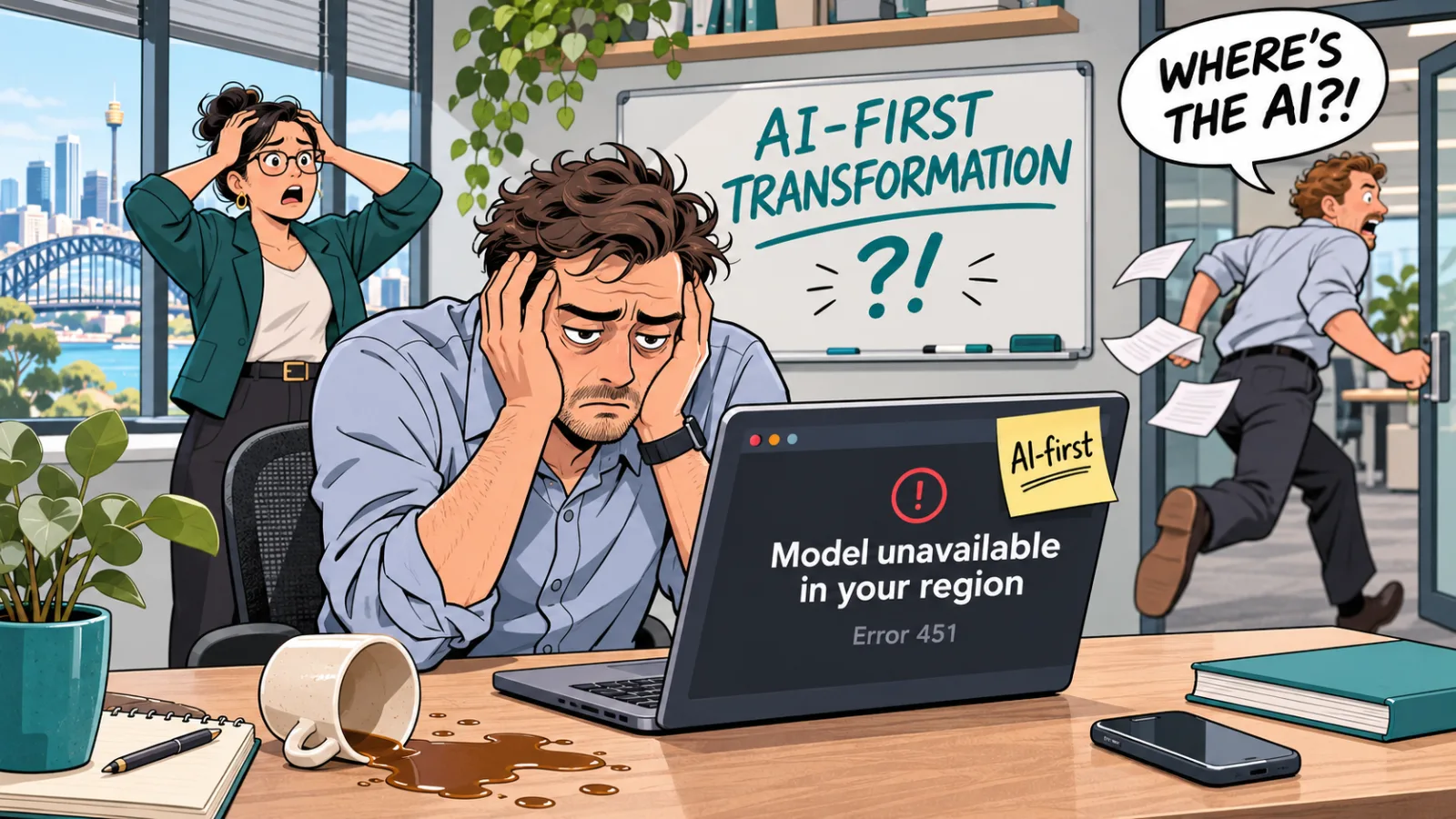
Somewhere in Australia right now, a board is nodding along to a slide that says "AI-First Transformation." The IT team has been "right-sized." The dev budget has been moved to "innovation." And the plan, written in a font that cost money, is: we'll just use Claude.
Righto. Let me tell you about 12 June.
Full disclosure: I use Claude every day. I like it. That's exactly why I'm writing this.
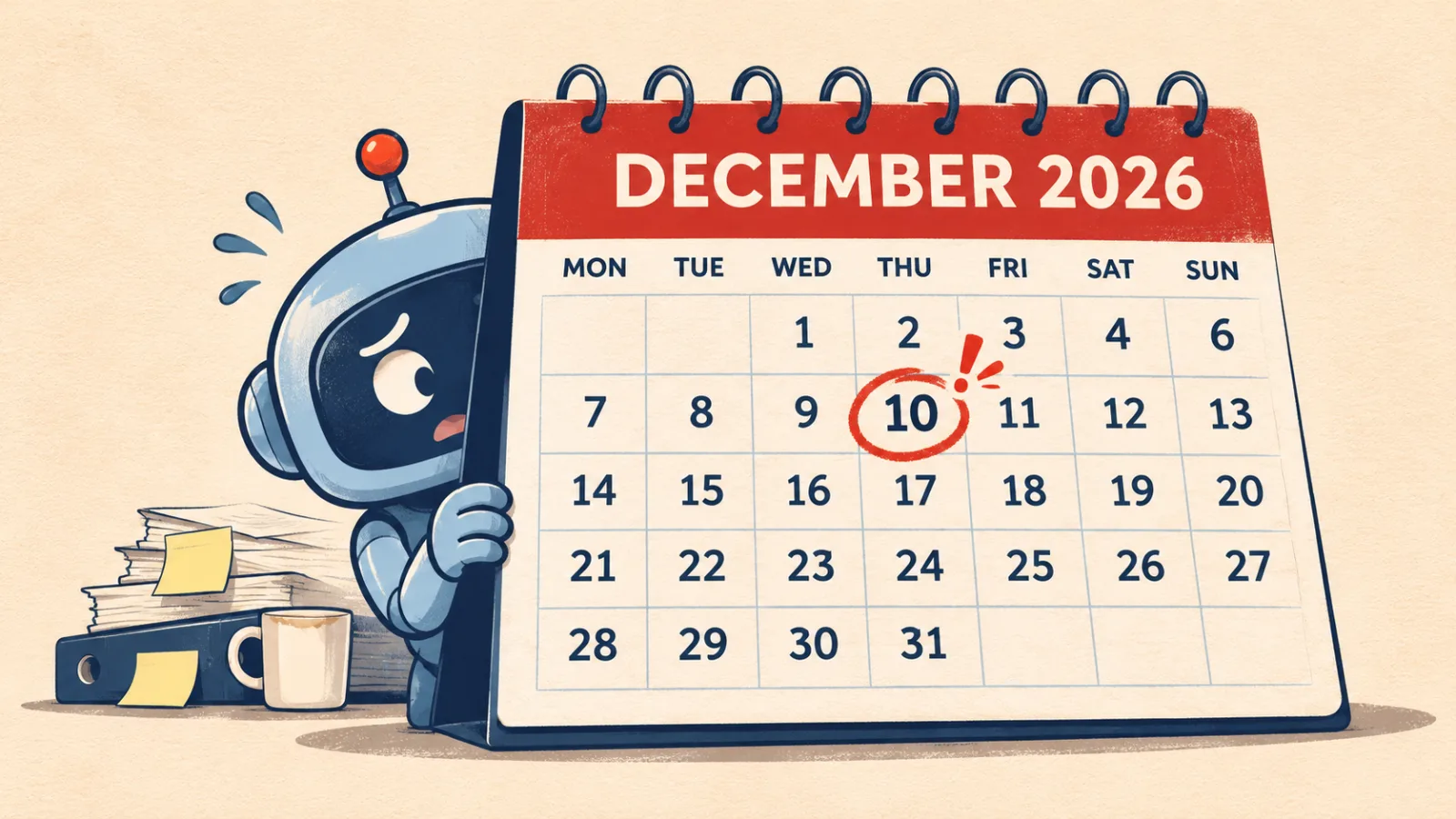
12 June: the day the robot left the building
On 12 June 2026, the US government told Anthropic to stop foreign nationals using its two newest models, Claude Fable and Claude Mythos, citing national security concerns. Anthropic switched them off for everyone to comply.
"Foreign nationals" included us. Every Australian business, every Australian developer, every "AI-first" strategy deck from Perth to Parramatta.
Nobody in Canberra voted on it. Nobody at your company was asked. A decision made in Washington on a Friday turned off a tool that some Aussie businesses had built their whole plan around.
Picture the Monday stand-up:
- "Where's the AI?" In America, mate. Not taking visitors.
- "Who wrote the code it was maintaining?" It did.
- "Who understands that code?" Great question. We let him go in March.
- "Can we just use a different one?" Sure. Who's going to check whether it works?
"But it came back!" Sort of
To be fair, the ban on Fable was lifted in under three weeks. Crisis over, back to the strategy deck.
Except Mythos, the really capable one, came back only for a hand-picked set of US organisations. Australian government agencies had been given a preview about two weeks before the ban. When access returned, they weren't on the list. And the US kept the right to bring the restrictions back whenever it likes.
So the most powerful version of the tool your strategy depends on can be:
- Switched off by another country's government,
- with no warning,
- for reasons nobody has to explain to you,
- and maybe not switched back on.
That's not a strategy. That's a subscription with a hostage situation.
The plan you didn't have
None of this means AI is bad. It means the plan was bad. The questions nobody asked before cutting the team:
- What happens if the tool disappears tomorrow? Not "slows down." Disappears.
- Who can read, fix and deploy the code without it?
- Where is our customers' data going, and are we allowed to send it there? The Privacy Act still applies, AI or no AI.
- Who checks the AI's work? If nobody on the payroll can tell a good answer from a dodgy one, you're not using AI. You're gambling with a very confident friend.
AI is a tool, not a team
Here's how we use it at SortaDigital. An AI assistant drafts. A developer who knows the code reviews it, tests it and ships it. If the AI vanished tomorrow, we'd be slower and grumpier, but every line would still be understood, tested and running.
That's the difference between using AI and depending on it. We wrote about how AI really cuts the cost of custom software, and it only works because someone's still counting the fingers.
What to do instead
- Keep at least one person who understands your systems. Staff or contractor, but a real human with a phone number.
- Own your code. It should live in your repository, with tests, and run without any one AI vendor.
- Have a plan B model. If one tool goes dark, can you swap? Has anyone tried?
- Write down where your data goes. Before a regulator or a customer asks.
If you want software that works whatever Washington decides on a Friday, say g'day.
The fine print
Claude didn't write this post. Mostly because the irony would have been too much.
Publishing notes — remove before publishing
- Facts checked 28 October 2026 against ABC News, 13 June 2026 and ACS Information Age. Re-check the current Mythos access for Australians before publishing; update the "came back" section if it has changed.
- The fine print joke: true only if you edit it yourself. Claude drafted this; keep the line only if you rewrite enough to own it, or swap it for "Claude helped write this post. I checked its homework."
- Cover image idea: an empty office chair with a sticky note reading "AI-first", and a "Model unavailable in your region" error on the monitor.