Your Chatbot Needs a Privacy Policy Now: The 10 December AI Rule
Bolted AI onto everything this year? From 10 December 2026, many Australian businesses must say in their privacy policy when a computer makes or helps make big decisions about people. A cheeky developer's guide to the rule nobody's read.
Every second company in Australia spent 2026 bolting AI onto something. The website has a chatbot. The hiring process has a "smart screener." The loans team has a "risk score." The marketing deck says "AI-powered" eleven times, which is ten more than the product.
And when anyone asks about the rules, the answer is the same: "Australia doesn't regulate AI, mate."
Half right. Let's talk about the other half.
Not legal advice. I build software. Check the OAIC's guidance or a privacy lawyer for your situation.
"Australia doesn't regulate AI, mate"
True, sort of. In December 2025 the government's National AI Plan dropped the idea of a dedicated AI Act and mandatory AI guardrails. Instead, AI is governed by the laws we already have: privacy, consumer law, anti-discrimination, work safety.
Which sounds relaxed until you realise those laws don't care whether the bad decision was made by Kevin from accounts or by a language model. And one of them just got an AI-shaped update.
The rule nobody read
From 10 December 2026, businesses covered by the Privacy Act have to explain in their privacy policy when they use a computer program to make, or substantially help make, decisions that could significantly affect people, using those people's personal information.
In plain English, your privacy policy needs to say:
- That you use automated decisions,
- what kinds of decisions they are,
- and what personal information goes into them.
The OAIC released its guidance at the end of September 2026, and it reads "computer program" broadly. Your clever AI tool counts. So does the spreadsheet macro that auto-rejects applications. So does the "rules engine" Dave built in 2017 that nobody's game to touch.
Does it apply to you?
Generally, the Privacy Act covers businesses turning over more than $3 million a year, plus some smaller ones such as health services and businesses that trade in personal information. If that's you, ask:
- Does software decide or recommend who gets hired, approved, refunded, flagged or rejected?
- Does it use personal info to do it?
- Could the result really matter to the person? Money, a job, access to a service, being treated differently.
Three yeses means you've got some writing to do before Christmas.
The AI audit you're about to do
Here's how it usually goes when a company actually looks:
- "We don't use automated decisions." Finds the hiring tool that auto-bins CVs without a degree.
- "Well, a human approves everything." The human clicks Approve on 400 a day without reading them. That's not oversight, that's a very slow rubber stamp.
- "The vendor handles compliance." The vendor's terms say it's your responsibility. They always do.
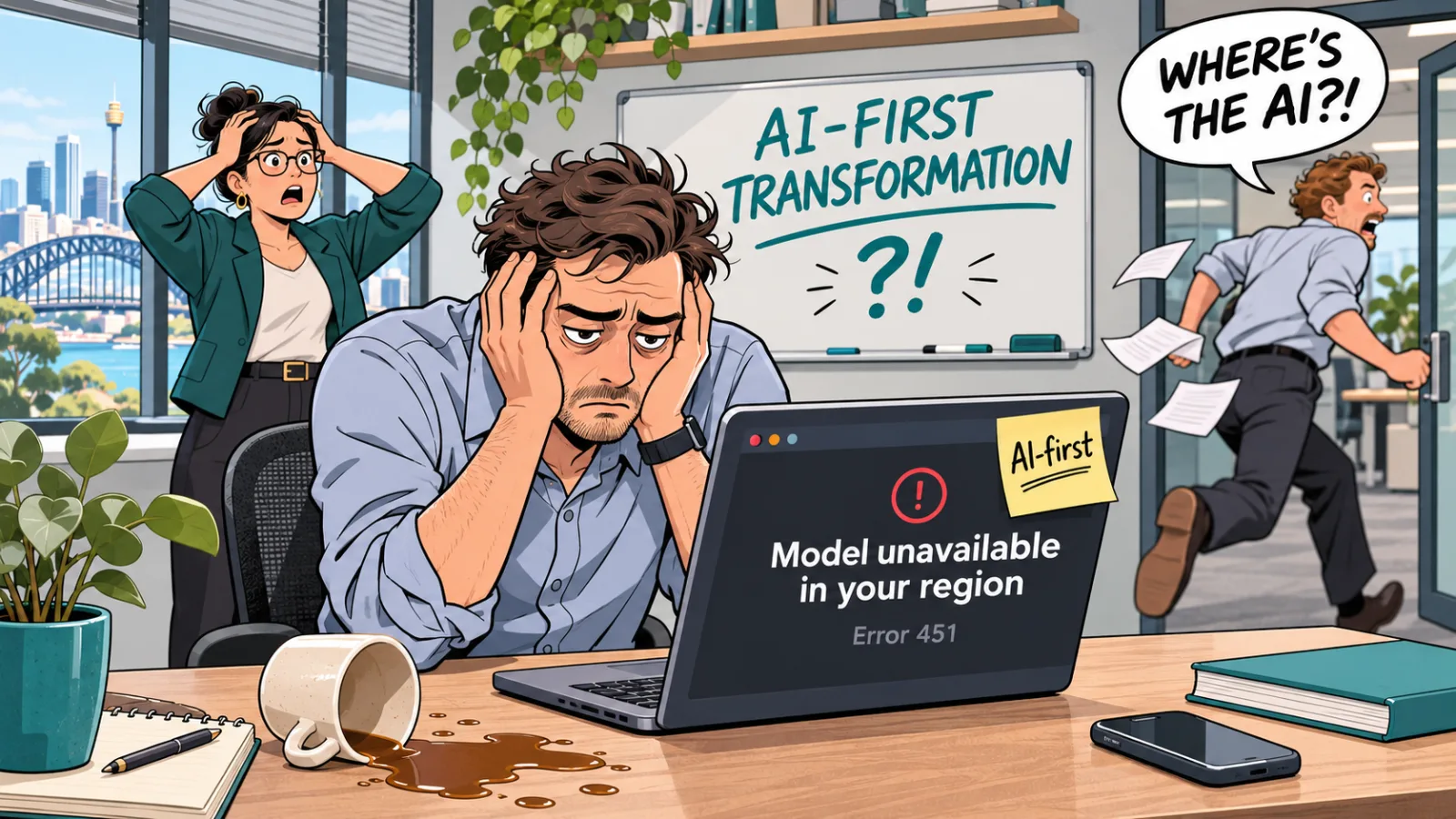
- "Nobody knows what the AI uses." That's the problem, and now it's a public one.
What a good answer looks like
The businesses that'll breeze through 10 December have something in common: they know what their software does.
- A list of every tool that makes or shapes decisions about people.
- What data each one uses, written down.
- A real human review step where it matters, with time to actually review.
- A privacy policy updated in plain English, not "we may leverage synergistic intelligence."
That's mostly a software design problem. When we build systems at SortaDigital, every important decision leaves an audit trail: who or what decided, when, and based on what. When the regulator, or a customer, asks "why was I rejected?", there's an answer. Talk to us if yours currently answers with a shrug.
The fine print
Australia doesn't have an AI Act. It has a Privacy Act, a regulator and a date in December. Turns out that's plenty.
Publishing notes — remove before publishing
- Facts checked 28 October 2026 against law-firm summaries of the OAIC guidance (e.g. Allens, October 2026). Re-check against oaic.gov.au before publishing; publish before 10 December or it loses its hook.
- Keep the $3 million turnover line general; there are exceptions and the OAIC page lists them.
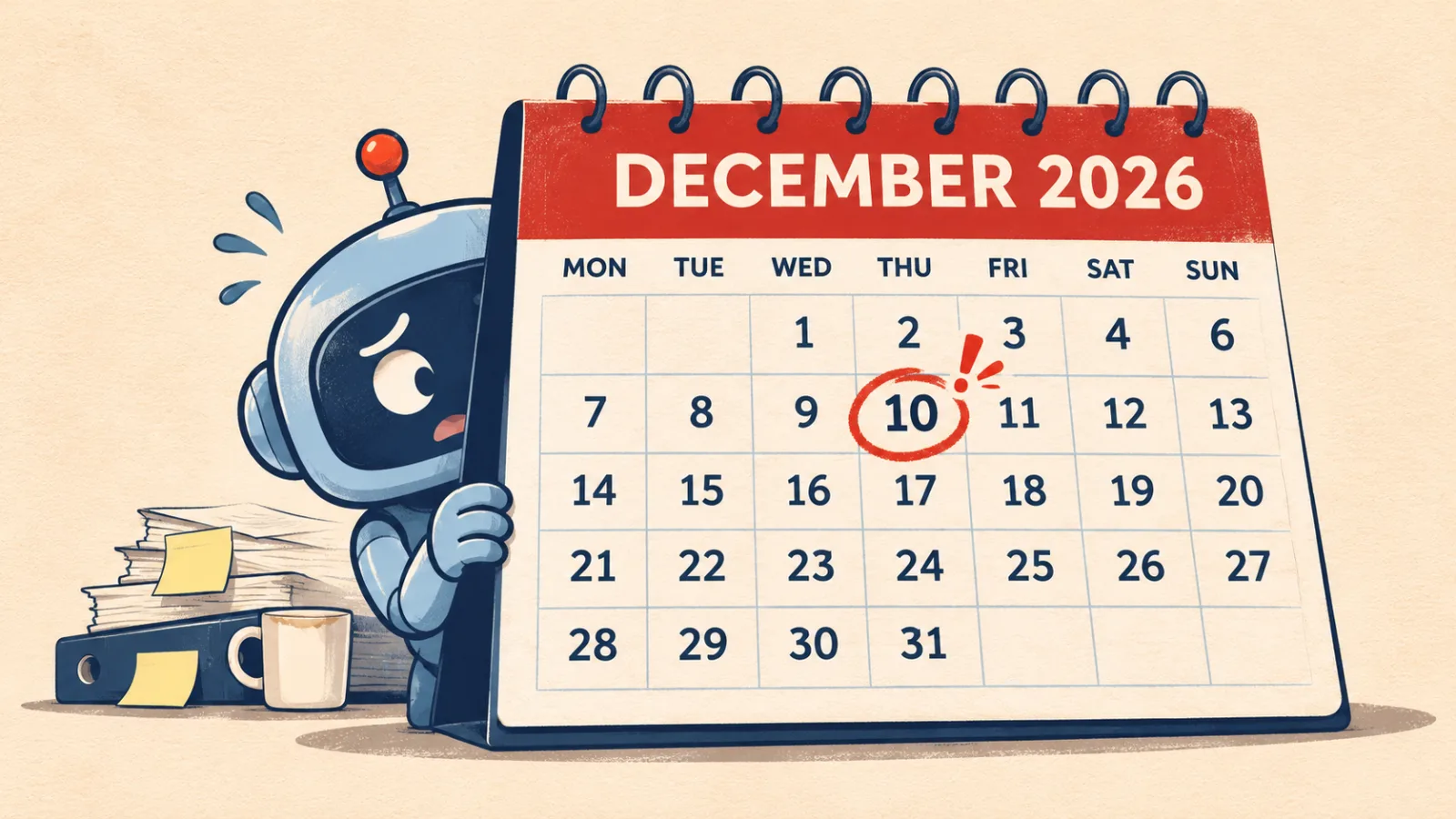
- Cover image idea: a calendar with 10 December circled and a nervous chatbot peeking from behind it.